

AI Usage Disclaimer: AI tools were used only for grammar correction, language improvement, and formatting. The content, concepts, and information presented in this article are based on the referenced source materials.
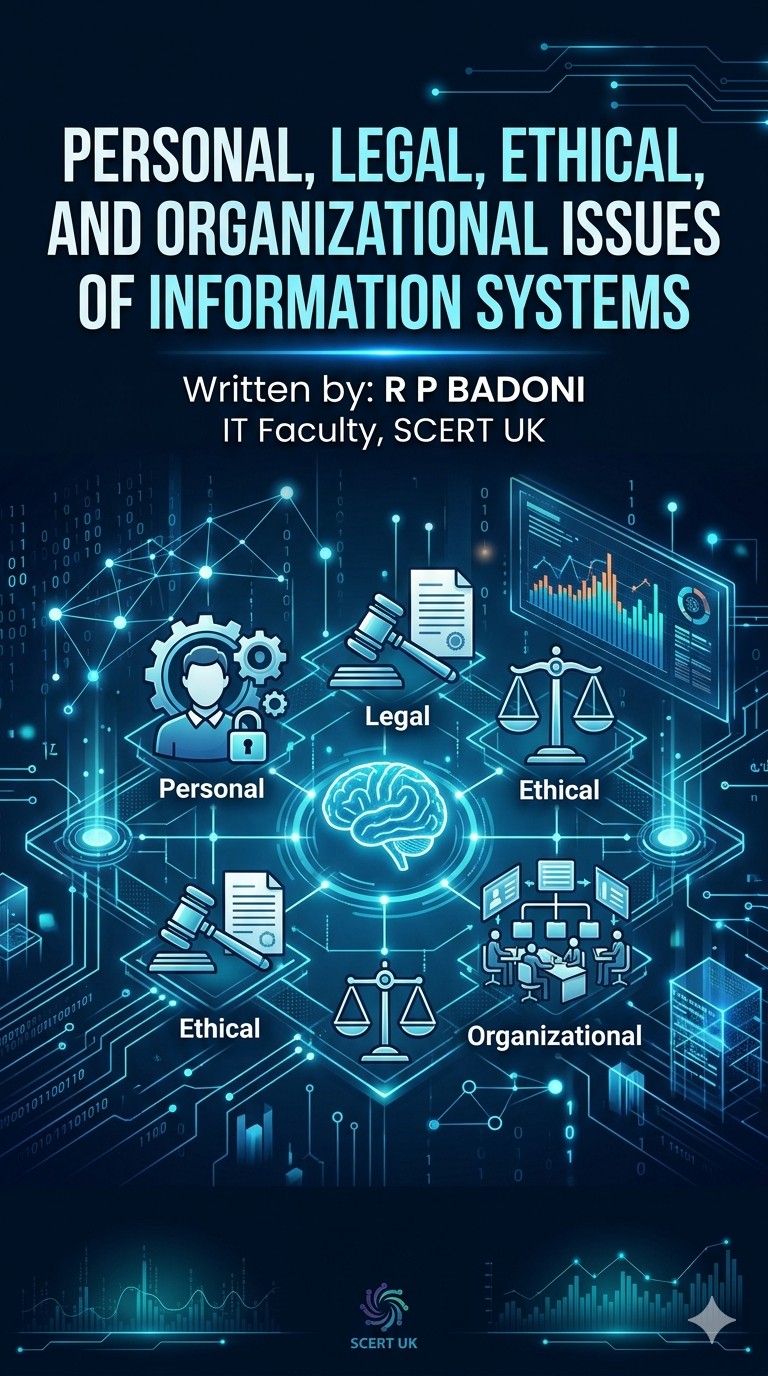
In today's digital world, information systems play an important role in our daily lives. We use computers, mobile phones, email, websites, and online services for communication, learning, business, and entertainment. While these technologies provide many benefits, they also bring several personal, legal, ethical, and organizational challenges that every user should understand.
Understanding Privacy and Responsible Use
One of the most important concerns in information systems is privacy. Every day, individuals share personal information online through social media, emails, websites, and applications. Protecting this information from misuse has become a major responsibility for both users and organizations.
Organizations often develop an Acceptable Use Policy (AUP) that defines how employees and users should legally and ethically use information systems. These policies explain acceptable behavior and the consequences of violating the rules. At the same time, users must also take responsibility for their online activities and ensure that they use digital resources appropriately. Accountability is therefore shared between individuals and organizations.
Another important concept is nonrepudiation, which ensures that parties involved in a digital transaction cannot deny their actions. This concept is widely used in online contracts, digital signatures, and electronic transactions to build trust and security.
Ethical Challenges in Information Technology
Technology has made it easier than ever to create, store, and share information. Unfortunately, these same advantages can also lead to unethical behavior. Cybercrime, cyber fraud, identity theft, and theft of intellectual property have increased significantly in recent years.
Many organizations address these issues by creating and enforcing codes of ethics. Ethical guidelines help employees understand what is acceptable and unacceptable when handling information and technology resources. Promoting ethical behavior is essential for maintaining trust and protecting organizational assets.
Information Censorship and Freedom of Expression
The internet provides access to a vast amount of information. However, not all information is freely available everywhere. Governments and organizations sometimes restrict access to certain content for political, cultural, religious, or security reasons.
Public information published by organizations or government agencies may be censored if it is considered harmful or offensive. On the other hand, personal information shared by individuals often falls under freedom of expression and may receive greater protection.
Several countries have implemented restrictions on internet access. The debate between censorship and freedom of information continues globally. Another related concept is internet neutrality, which suggests that internet service providers should treat all online data equally without favoring specific websites or services.
Parents also use content-filtering tools such as CyberPatrol, CyberSitter, Net Nanny, and SafeSurf to protect children from inappropriate online content. These tools help create a safer digital environment for young users.
Protecting Intellectual Property
Intellectual property refers to creations of the human mind that have legal protection. These include inventions, trademarks, logos, literary works, artistic creations, software, websites, and digital content.
Intellectual property is generally divided into two categories:
- Industrial Property—including inventions, trademarks, logos, and industrial designs.
- Copyrighted Material—including books, music, artwork, websites, computer graphics, and software.
Respecting intellectual property rights is essential in the digital age. Unauthorized copying, sharing, or modification of copyrighted material can lead to legal consequences. However, the Fair Use Doctrine allows limited use of copyrighted content for purposes such as education, research, criticism, and commentary under specific conditions.
Conclusion
Information systems have transformed modern society by improving communication, education, business operations, and access to knowledge. However, these benefits come with responsibilities. Users must understand privacy protection, ethical behavior, information censorship, and intellectual property rights to become responsible digital citizens.
Educational institutions, organizations, governments, and individuals all share the responsibility of creating a safe, ethical, and legally compliant digital environment. By promoting awareness and responsible use of technology, we can maximize the benefits of information systems while minimizing their risks.
References
- Personal, Legal, Ethical, and Organizational Issues of Information Systems. Presentation slides are provided for educational purposes. Topics referenced include privacy, acceptable use policies, accountability, nonrepudiation, ethical issues in information technology, censorship, internet neutrality, and intellectual property.
- Laudon, K. C., & Laudon, J. P. (2022). Management Information Systems: Managing the Digital Firm (17th Edition). Pearson Education.
- Stair, R., & Reynolds, G. (2021). Principles of Information Systems (14th Edition). Cengage Learning.
- World Intellectual Property Organization (WIPO). (2025). What is Intellectual Property? Available at: https://www.wipo.int
- United Nations Educational, Scientific and Cultural Organization (UNESCO). (2024). Digital Citizenship and Ethics in the Information Society. Available at: https://www.unesco.org
- Internet Society. (2024). Internet Neutrality and Open Internet Principles. Available at: https://www.internetsociety.org
- Association for Computing Machinery (ACM). (2024). ACM Code of Ethics and Professional Conduct. Available at: https://www.acm.org/code-of-ethics